No National ID, No Health Insurance: Nepal Sets December 16 Deadline
Nepal has announced a December 16 deadline for obtaining a National ID to access health insurance.
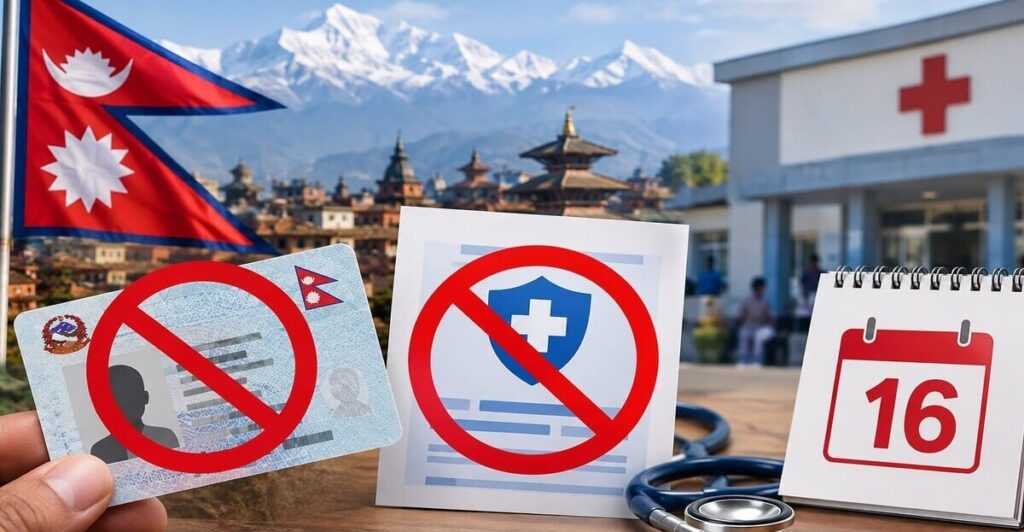
Nepal has set December 16 as the deadline for citizens to obtain a National ID linked to health insurance.
Nepal: From mid-December, a Nepali citizen who wants to join the government’s health insurance scheme, renew a policy or use insured services will need one more document: the National ID card. The Health Insurance Board (HIB) has decided that the requirement takes effect on December 16, which falls on Poush 1 in the Nepali calendar. It applies to everyone aged 16 and above.
The decision came at a board meeting that also approved changes to how claims are recorded and how providers are paid. Together, they tie the scheme’s identity checks, record-keeping and payment rules more closely to digital systems.
Nepal: What changes for policyholders on December 16
The National ID requirement covers new enrolments, renewals and access to health insurance services. Families already insured under the general and targeted categories must update their details through the HIB e-Portal, the board’s online platform.
The board says the update is meant to confirm who is insured, curb duplicate enrolments, refresh know-your-customer (KYC) records and make claims easier to manage.
The e-Portal went live in recent weeks. According to Tech Pana, it handles registration, renewal, premium payments, KYC updates, policy checks and a digital health insurance card. It is also linked to the National ID system, so people who hold the card can have their personal details filled in automatically. The Himalayan-region daily Nepal News reported that board spokesperson Dr Pawan Kumar Shah said applicants can now complete enrolment forms themselves, without an enrolment assistant. The service operates under a 2083 BS procedure on electronic enrolment and renewal.
Also Read: BMW Fire Claim Rejected, Commission Orders ₹70.75 Lakh Payout
The link to the national identity system predates this week’s decision. MyRepublica reported that the board signed an agreement with the Department of National ID and Civil Registration to integrate their data, so identities can be verified digitally against National ID numbers. The department runs a Citizen Portal where people can apply for the card, check an application’s status and download an electronic version of the card.
The reports on the decision did not describe transition arrangements for people who do not yet hold the card.
Nepal: Digital claims, diagnosis codes and a payment review
The board also decided to recognise digital health records and claim details received from hospitals through electronic medical record (EMR) systems, provided they meet the prescribed standards. In the first phase, 2,189 customised ICD-11 codes will be used in the Insurance Management Information System (IMIS). ICD-11 is the World Health Organization’s latest classification of diseases, and its codes standardise how diagnoses are recorded. IMIS is the platform through which providers submit claims, which the board reimburses after verification.
The board further decided to form a task force to study “strategic purchasing”, meaning how the scheme selects, classifies and pays health service providers. The board wants the service purchasing and payment system to be scientific and cost-effective. The task force has 60 days to submit its report.
The review comes as the scheme’s finances draw scrutiny. The Himalayan Times reported earlier this year that the programme faces a projected shortfall of Rs 25.26 billion in the coming fiscal year. It said average daily claims had reached Rs 8 crore and that the Rs 3,500 annual family premium covers about 25 percent of total programme costs.
Nepal – The scheme and the road to a mandatory ID
Nepal’s national health insurance programme began in 2072 BS (2016). The HIB was set up in 2017 under the Health Insurance Act, and the scheme now operates in all 77 districts. The Himalayan Times reported that nearly 9.8 million people have enrolled since launch, about 60 percent of whom are currently active members. A family of up to five pays Rs 3,500 a year for cover of up to Rs 1 lakh, with an extra Rs 700 for each additional member.
The government’s broader push to make the National ID a requirement for public services has a contested history. A June 2024 Gazette notice set phased deadlines for using the card, including for social security, health insurance and pensions in selected districts. In August 2024, the Supreme Court issued an interim order against making the card compulsory for social security allowances and other services. In early 2025, the court dismissed the petitions against the requirement, according to the Kathmandu Post, and the department said it would move to make the card mandatory for government services.