Policybazaar Can Survive Even a “Zero Commission World”, Says PB Fintech’s Yashish Dahiya
Policybazaar founder Yashish Dahiya says the business can survive the proposed insurance commission overhaul and will comply “in letter and spirit.”
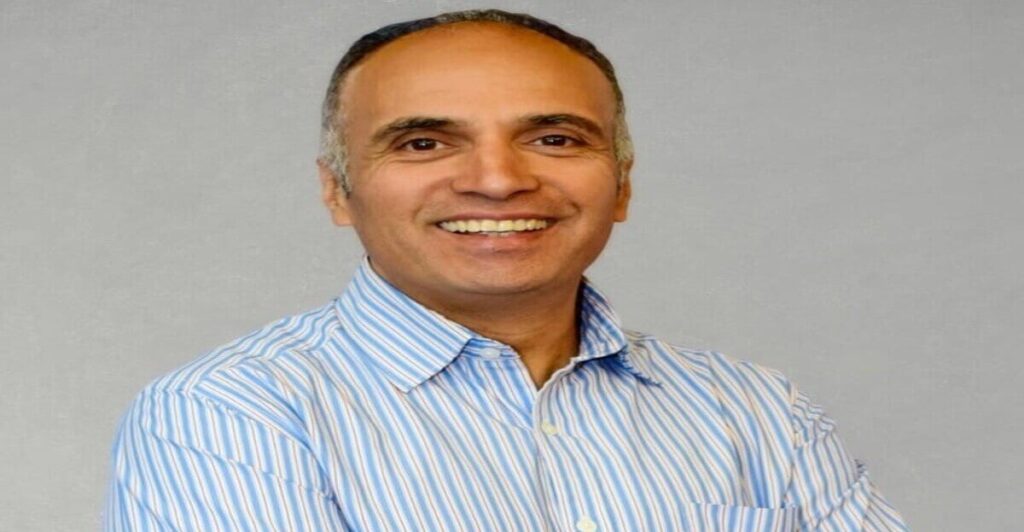
Policybazaar can survive even a "zero commission world," says PB Fintech Chairman Yashish Dahiya.
NEW DELHI, Policybazaar: PB Fintech Chairman and Group CEO Yashish Dahiya has said the company’s business model can survive the insurance regulator’s proposed overhaul of distributor remuneration, adding that PB Fintech welcomes the consultation paper and will abide by its conditions “in letter and spirit.”
Speaking in his first extensive public interview since the paper was released, Dahiya said the proposals were “long due” and that the company’s model, built on customer value, would remain viable in the medium and long term. He also apologised for what he described as harsh statements made in the days after the paper surfaced.
Policybazaar: “Welcome the Paper,” Says Dahiya, Apologises for Earlier Remarks
Asked whether PB Fintech’s business could withstand the proposals if they were implemented as drafted, Dahiya answered in the affirmative. “The simple answer is yes,” he said, adding that in any situation where customer value is enhanced, the company would prosper.
He said mis-selling had been a significant problem for the industry, largely in savings products, while claims issues had been serious in health insurance. Policybazaar, he said, had focused on term insurance rather than selling savings products, which he described as a more consumer-centric category.
Dahiya also used the interview to apologise for earlier reactions. He said the fall in the company’s share price had not troubled him, but a comment made on another broadcast the day after, suggesting that consumer-centric businesses had gained while aggregators had lost, had hurt him. A market value of around ₹1.6 lakh crore had been wiped out across the sector, the interviewer noted.
“After 18 years of trying to do the right thing for the consumers,” he said, being told the company was not consumer-centric had been painful. He said he had to think not only of his own emotions but also of the company’s 35,000 employees and three to four lakh point-of-sales (POS) agents, and should respond with more restraint.
He said he had not yet spoken to the regulator but expected to get an opportunity to present the company’s views in due course.
Also Read: Donald Trump Announces One-Time $90 Medicare Payment for 20.8 Million Seniors
Policybazaar: Four Regulatory Goals, and Two Requests
Dahiya said he saw four broad themes in the paper: reducing mis-selling, improving claims support, lowering prices and increasing insurance penetration. He said the company supported each of them.
Citing page 22 of the consultation paper, he said it showed participating and non-participating products carrying payouts two to three times those of linked products, while term insurance had been recognised as one of the better products. This, he said, was in the direction of the company’s approach rather than against it.
On claims, he said agents tied to a single insurer have limited ability to challenge that company’s decisions at the point of claim, whereas open-architecture players working with multiple insurers can push back. He said that in the last financial year, 11,156 health insurance claims that had been rejected were reconsidered and paid after the company’s intervention.
On pricing, he said comparison lowers prices, and that the large insurers’ main complaint against the platform over 15 years had been that they get compared. He said one insurer never joined the platform, and the second-largest private insurer withdrew just before PB Fintech’s IPO.
On penetration, he said the company’s health and term insurance business had been growing at more than 50% and that it accounted for over 30% of fresh lives added in the two categories.
Policybazaar: Dahiya said the company had two requests:
Choice should not be discouraged. Under the proposed scheme, he said, offering customers a choice of insurers would result in lower pay for the distributor.
Timelines should be aligned. Expense of management, which he called the real cost to the customer, should be reduced in step with payouts to distributors; otherwise, he said, the benefit would not reach customers.
He added that around 15 lakh people are employed as POS agents with brokers, and that an overnight change in the model would require finding roles for them. He welcomed the provisions authorising quality-based and small-city sales.
On the question of lower commissions in health insurance, he said he had no strong view. “Whatever the regulator feels is right, is right,” he said, adding the company’s only concern was that reducing choice would remove independent advisers who support customers at the claims stage. He said no single insurer accounts for more than 20% of the company’s sales, which gives it leverage to press for claim settlements.
Policybazaar: Revenue Impact, Cost Levers and Profit Position
Dahiya said the company could handle any revenue impact, saying he had mentally prepared for a “zero commission world” since the company began. He said:
About 80% of sales come from direct traffic, built through brand investment of “thousands of crores.”
In the contact centre, 26% of staff generate 70% of sales. Even if marketing were shut down and the contact centre sharply reduced, he said, the company could still do about 70% of its business.
On the financial impact, he said that if the proposals took effect as drafted and volumes stayed unchanged, revenue could fall to 60-70% of current levels. With profit at around 10% of revenue, a 30% fall with no volume growth or cost cuts would put the company at a loss equal to about 20% of revenue. He said he did not expect that outcome, as volume growth was likely because other players would find the changes harder to absorb, and the company would also cut costs.
He said hiring, earlier at about 2,000 people a month, had already been stopped, and that natural attrition, particularly among junior staff, would reduce headcount.
Dahiya also addressed the company’s profitability. He said PB Fintech reported a profit of ₹670 crore on ₹30,000 crore of sales last year, of which ₹380 crore was interest income on a cash balance of about ₹5,000 crore. Operating profit was therefore under ₹300 crore, less than 1% of sales, he said, in the company’s 17th year and after 15 years of losses. He said his stake is around 3.5-3.8%.
Asked what PB Fintech might become if revenue fell sharply, Dahiya declined to discuss strategy, saying the company would seek the regulator’s guidance on every matter. He said he had spoken to more than 2,000 investors since the paper was released, and noted that investors had put ₹80,000 crore into the company, a figure that has since fallen to about ₹40,000 crore in market value.