One Day Late, Zero Cover: What Happens the Moment Your Car Insurance Lapses
Car insurance protects you against unexpected losses, but that protection ends when the policy lapses. Here’s what happens when your car insurance renewal is delayed, even by a single day.

Car insurance can lapse as soon as your policy expires, leaving your vehicle without active cover. Even a one-day delay in renewal can expose you to financial and legal risks.
Car Insurance: For a policyholder whose car insurance ran out at midnight, the next morning looks no different. The car sits in the same parking spot and the policy document is still in the inbox. What has changed is that the protection behind the document is no longer running, and every trip from that point is made without it.
Insurance experts say this gap, even a single day long, is one of the most common and least understood moments in motor insurance. Here is what changes, and what a policyholder should do next.
Car Insurance: Cover ends on the expiry date, not the renewal date
A motor policy covers incidents only within the period stated on the schedule. When that period ends, the policy cannot be relied on for anything that happens afterwards.
The impact depends on what has lapsed. If the whole policy has expired, both the vehicle and the owner’s liability towards others are unprotected. Some owners, however, hold a standalone third-party policy alongside a separate own-damage policy, and only the own-damage portion may have ended. In that case liability to other people may still be in force, but the owner’s own car is not covered until fresh protection begins.
Insurers add that the new policy applies only from its stated start date. Renewing late does not extend cover backwards, so an accident, theft or fire in the interval is not recoverable under either the old or the new policy.
Also Read: Policybazaar Can Survive Even a “Zero Commission World”, Says PB Fintech’s Yashish Dahiya
Car Insurance: Driving without valid third-party cover is an offence
Third-party insurance is compulsory for any vehicle used on a public road in India under the Motor Vehicles Act, 1988. If that cover lapsed with the policy, driving the car is a legal matter as well as a financial risk.
Under the Act as amended in 2019, a first offence for driving without valid insurance can draw a fine of up to ₹2,000, imprisonment of up to three months, or both. A repeat offence carries a fine of up to ₹4,000, imprisonment of up to three months, or both.
Owners are advised to check the policy schedule before driving to see whether a valid liability policy is still active. A separate third-party policy satisfies the legal requirement, but it does not pay for damage to the insured’s own car.
Car Insurance: With no insurer, the owner may have to pay compensation personally
If an uninsured car is involved in an accident that injures or kills another person, there is no insurer to meet the compensation awarded by a motor accident claims tribunal. The liability then falls on the vehicle owner personally. Third-party claims can involve large sums, particularly in cases of death or permanent disability, and they are settled irrespective of whether the owner’s own policy had lapsed by a day or a year.
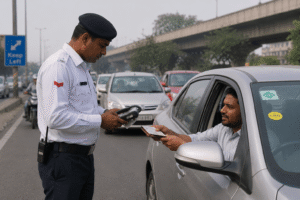
Vehicle insurance status is also recorded in the government’s national transport database, which enforcement agencies can check. An expired policy can therefore surface during a routine stop or through an automated challan, not only after an accident.
Car Insurance: Why the length of the gap matters
Insurers treat a lapsed policy that is being revived as a “break-in” case. In such cases, cover typically begins only after the insurer completes its inspection or approves the vehicle’s condition, not at the time of payment. Between the moment of purchase and that approval, the car may still be uninsured.
The duration of the lapse also matters for the no-claim bonus. Insurers commonly allow a limited window after expiry within which a claim-free record can be carried over, and a longer gap can reset the discount to zero. The exact window differs by insurer, so owners are advised to confirm it in the renewal terms.
Car Insurance: Add-ons, inspection and no-claim bonus
Optional covers such as zero depreciation, engine protection and similar extras are generally tied to the own-damage section of the policy. If that section was inactive, these covers cannot be assumed to apply. Policyholders are advised to confirm which add-ons appear on the renewed policy, when they take effect and what conditions attach.
The renewal itself may also work differently after a lapse. Because there is a break in cover, insurers may ask for photographs, a video or a physical inspection of the vehicle before issuing a new policy. The requirement varies with the insurer, the type of plan, the condition of the vehicle and how long the policy has been inactive.
Payment alone does not confirm that protection has begun. The policy document should be checked for its effective start date and time.
A short delay does not necessarily wipe out all renewal benefits, but the no-claim bonus is governed by the insurer’s renewal rules and the length of the break. Owners with a claim-free record should check those terms before assuming the discount will carry over unchanged.
Car Insurance: What policyholders should do now
Insurers and advisers suggest the following steps once a missed renewal is noticed:
Check the exact expiry date and identify which sections of the policy have ended.
Confirm whether a valid third-party policy is still active.
Avoid driving the car if mandatory third-party cover is not in force.
Begin the renewal immediately.
Complete any inspection or documentation the insurer requests.
Check the start date on the new policy once it is issued.
Review the add-ons and benefits included before relying on them.
Renewal, inspection requirements, retained benefits and claim eligibility all remain subject to the insurer’s terms and underwriting rules. Policyholders should rely on the dates and conditions printed in their policy documents.