No Insurance, No Fuel: MP Vehicles May Be Turned Away at Petrol Pumps
No Insurance, No Fuel could become the rule for vehicle owners in Madhya Pradesh. Petrol pumps may deny fuel to vehicles that do not have valid insurance.
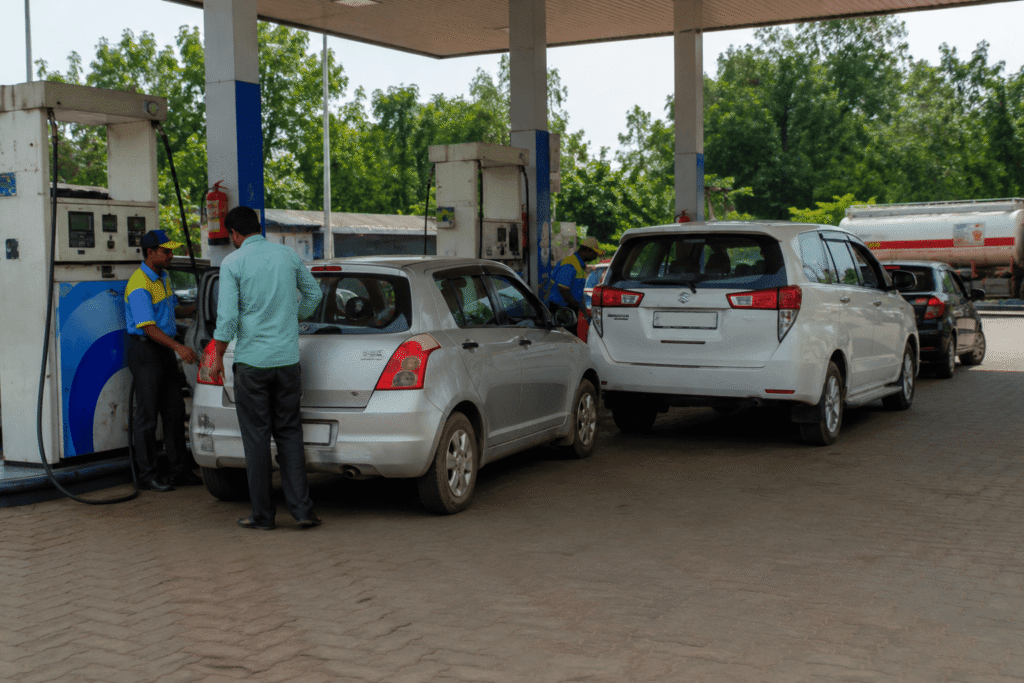
No Insurance, No Fuel: Madhya Pradesh may turn away uninsured vehicles at petrol pumps.
No Insurance, No Fuel: Drivers in Madhya Pradesh are set to find out whether they can be denied fuel over invalid vehicle insurance, with the state government preparing to launch a pilot project that could see petrol pumps refuse fuel to uninsured vehicles. The move is part of a wider drive to tighten road-safety enforcement through technology, alongside plans to expand the state’s Zero-Fatality District programme to nine districts.
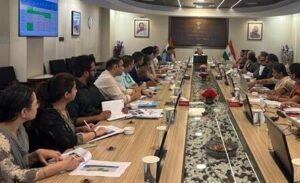
The decision to launch the uninsured-vehicle pilot in one district was taken at a meeting chaired by Justice Abhay Manohar Sapre (retired), chairman of the Supreme Court Committee on Road Safety, at the Chief Secretary’s Office in Bhopal on Monday. The district with the highest number of uninsured vehicles will be picked for the pilot. Under the proposed system, cameras will be installed at petrol pumps and linked to the central VAHAN portal to identify vehicles without valid insurance and stop them from being refuelled.
Justice Sapre has directed the state government to launch the pilot at the earliest, following discussions with officials of the Union Ministry of Road Transport and Highways and technical experts. Once tested, the system is proposed to be expanded to other districts in phases.
The push in Madhya Pradesh follows a broader Supreme Court direction issued on August 4, 2026, by a bench of Justice Sanjay Karol and Justice Prashant Kumar Mishra, which ordered the central government to design a nationwide pilot project linking fuel sales to a vehicle’s insurance status.
That task was handed to the Insurance Regulatory and Development Authority of India (IRDAI), working with the Ministry of Road Transport and Highways (MoRTH) and the Ministry of Petroleum and Natural Gas. At a follow-up hearing around August 19-20, 2026, the court pressed the Centre to move ahead with implementation without further delay, with Delhi named as an initial pilot city at the national level — a rollout Madhya Pradesh now appears set to run in parallel, through its own district-level pilot.
Also Read: ‘No Insurance, No Fuel’: Supreme Court Cracks Down as 56% of Vehicles Run Uninsured
No Insurance, No Fuel: What the Supreme Court Has Ordered
Hearing a case on road safety and motor insurance compliance, a bench of Justice Sanjay Karol and Justice Prashant Kumar Mishra directed the Insurance Regulatory and Development Authority of India (IRDAI) to work with the Ministry of Road Transport and Highways (MoRTH) and design a pilot project under which fuel sale would be linked to a vehicle’s valid insurance status. Under the plan, a vehicle without valid cover would simply not be refuelled at the pump until its owner obtains a fresh policy.
The Court’s direction stems from concerns over widespread non-compliance with Section 146 of the Motor Vehicles Act, 1988, which makes third-party insurance mandatory for every vehicle plying on Indian roads. Despite the law being in force for decades, official data cited in the proceedings suggests that more than half of all vehicles in the country continue to run without valid insurance.
No Insurance, No Fuel: Why the Court Stepped In
The bench flagged the scale of the compliance gap as a serious road-safety concern, noting that a similar direction issued roughly eight years ago had failed to bring meaningfully large numbers of vehicles under insurance cover. Government data placed before the court showed that road accident numbers have stayed stubbornly high in recent years, reinforcing the case for stricter enforcement.
The judges reasoned that denying fuel to uninsured vehicles would serve two purposes at once: it would help identify vehicles that are either uninsured or unregistered, and it would push owners to buy valid insurance simply to keep their vehicles on the road. The court described this as a practical, ground-level way to enforce the statutory insurance mandate, to be backed by Automatic Number Plate Recognition (ANPR) camera technology at fuel stations.
No Insurance, No Fuel: How the Fuel-Insurance Link Is Meant to Work
Under the proposed system, petrol pumps would be equipped to verify a vehicle’s registration and insurance status at the point of sale, cross-checking details against government databases such as the VAHAN vehicle registration portal and the Insurance Information Bureau maintained by IRDAI. ANPR cameras installed at fuel stations would automatically read number plates and flag vehicles with lapsed or missing insurance.
If a vehicle is found to be uninsured, the station would be authorised to withhold fuel altogether until the owner produces proof of a valid policy. The same database integration is also expected to support automatic issuance of e-challans to uninsured vehicles detected through the camera network, extending enforcement beyond the fuel pump itself.
The court noted that the Ministry of Petroleum and Natural Gas has, in principle, raised no objection to the proposal, though officials representing the Centre have flagged operational concerns that still need to be worked through before a full rollout.
Timeline: Key Dates and Who’s Behind the Plan
When it happened:
- August 4, 2026 — The Supreme Court bench of Justice Sanjay Karol and Justice Prashant Kumar Mishra passed the original order directing a pilot project to link fuel sales with valid vehicle insurance.
- Mid-to-late August 2026 — At a follow-up hearing, the Court pressed the Centre to move ahead with implementation after the petroleum ministry raised operational concerns, and indicated the pilot should start in Delhi.
Who is implementing it:
- IRDAI (Insurance Regulatory and Development Authority of India) and the MoRTH (Ministry of Road Transport and Highways) have been tasked by the Court with jointly designing the pilot project.
- The Ministry of Petroleum and Natural Gas is also involved, since the rule would be enforced at fuel stations under its purview; the Court noted the ministry has no objection in principle, though it has flagged implementation concerns.
How it will be enforced:
- ANPR (Automatic Number Plate Recognition) cameras at petrol pumps, linked to the VAHAN database and the Insurance Information Bureau, would verify insurance status before fuel is dispensed.
Where Madhya Pradesh stands:
- No date or formal order has been announced for Madhya Pradesh so far. The pilot is currently confined to Delhi, and any rollout in MP would depend on directions from the state transport department once the Centre finalises the framework.
Also Read: Canara HSBC Life CFO Tarun Rustagi Resigns, to Leave in November
No Insurance, No Fuel: Pilot to Begin in Delhi Before Wider Rollout
Rather than an immediate nationwide mandate, the Supreme Court has directed that the scheme first be tested through a pilot project, with Delhi named as the starting point. During a follow-up hearing, the bench pressed the Centre’s counsel to move forward with implementation after concerns were raised by the petroleum ministry, making clear that the pilot should begin without further delay.
This phased approach means Madhya Pradesh, along with most other states, is not yet directly covered by an active fuel-insurance verification system at its petrol pumps. However, given that the Supreme Court’s underlying direction applies to insurance compliance nationwide, and similar “no document, no fuel” enforcement drives have already been rolled out at the state level for other requirements, transport officials and petrol pump associations in Madhya Pradesh are likely to come under pressure to adopt a comparable system once the Delhi pilot is evaluated.
No Insurance, No Fuel: Madhya Pradesh’s Track Record With Petrol Pump Enforcement
Madhya Pradesh is no stranger to using fuel stations as enforcement checkpoints for road safety rules. The state has previously implemented a “no helmet, no petrol” order under provisions of the Bharatiya Nagarik Suraksha Sanhita, requiring pump staff to refuse fuel to two-wheeler riders not wearing helmets, with penalties including potential imprisonment or fines for non-compliant fuel stations. Enforcement action, including the sealing of a petrol pump in Indore for violating the helmet rule, has already been carried out by district administrations in the state.
This existing enforcement infrastructure — involving coordination between petrol pump associations, district administrations, and regional transport offices — could make it comparatively straightforward for Madhya Pradesh to extend similar checks to insurance verification once the Centre finalises the pilot framework and issues state-wise directions.
No Insurance, No Fuel: Other Road Safety Measures Ordered Alongside the Fuel Rule
The Supreme Court’s order was not limited to the fuel-insurance link. The bench also directed that the mandatory period for third-party insurance be extended from the current terms to four years for new cars and six years for new two-wheelers, and asked IRDAI to issue the necessary directions to insurers without delay. This came despite IRDAI and the General Insurance Council having earlier recommended against extending the insurance period.
Additionally, the court directed the Centre to pilot automatic vehicle detection at toll plazas on certain highway corridors, aimed at replacing manual stops with camera-based systems similar to those proposed for insurance verification at fuel stations.
No Insurance, No Fuel: What It Means for Vehicle Owners
For now, there is no confirmed date for when — or whether — Madhya Pradesh’s petrol pumps will begin checking insurance status before dispensing fuel, since the pilot is set to launch first in Delhi. Vehicle owners in the state are nonetheless being advised to treat this as an early warning: keeping third-party insurance current would help avoid disruption if and when the verification system is extended to Madhya Pradesh’s fuel stations.
Owners of two-wheelers and private cars in the state can check and renew their insurance policies through their insurer or via the government’s VAHAN portal, and are encouraged to keep digital or physical proof of a valid policy on hand while driving, regardless of when enforcement at the pump begins.